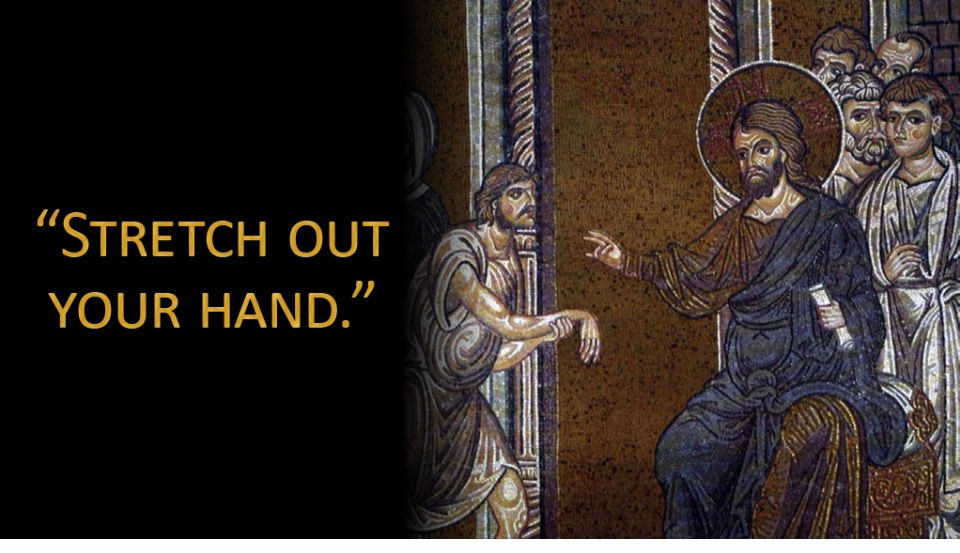
Jesus entered the synagogue. There was a man there who had a withered hand. They watched Jesus closely to see if he would cure him on the sabbath so that they might accuse him. He said to the man with the withered hand, "Come up here before us." Then he said to the Pharisees, "Is it lawful to do good on the sabbath rather than to do evil, to save life rather than to destroy it?" But they remained silent. Looking around at them with anger and grieved at their hardness of heart, Jesus said to the man, "Stretch out your hand." He stretched it out and his hand was restored. The Pharisees went out and immediately took counsel with the Herodians against him to put him to death.
REFLECTION
with anger and grieved at their hardness of heart
In Mark, there are recordings of cures happening in the synagogue on the Sabbath. The cure of the demoniac in the synagogue on the Sabbath, followed by the cure of Simon’s mother in law, who had a fever. That same evening in Capernaum, after sunset, many sick and those who were possessed by devils were healed. In today's Gospel, Jesus went into the synagogue, and healed a man who had a withered hand. ‘And they were watching him to see if he would cure him on the Sabbath day, hoping for something to use against him’.
The Jewish law commanded a weekly day of rest which was the seventh day, Saturday, from all work. This was in honor of God's rest from creation. The restrictions of what one could do, the prohibition of activities such as lighting fires, carrying items, and if anyone broke the rest they could be punished by death. Other works of labor included planting, sowing, kneading, cooking, weaving, building to name some more.
Jesus challenged the legalistic interpretations of the sabbath law. Instead He said that the Sabbath was created for man and not man for the Sabbath (Mark 2:27). With love and mercy and filled with compassion and good deeds, Jesus did not violate the rules for the Sabbath; He acted against the Pharasaical interpretation of the law, showing that the needs of the people needed to be met. The Pharisees' interpretation allowed caring for their animals on the Sabbath but healing a human being was not. The Pharisees added traditions to the law that God had given them. These man made traditions defined the healings of Jesus as "work".
Jesus was angry and grieved over their hardness of heart. Do we find ourselves digging in when our pride does not allow us to see right from wrong? Do we react to the person and further commit sins of hate, resentment, unforgiveness and uncharity because we refuse to see if we are at fault? We should not respond negatively to someone who opposes our thinking or beliefs.

Comments